
Redirecting Cat Scratching: What to Do When Your Cat Targets the Couch

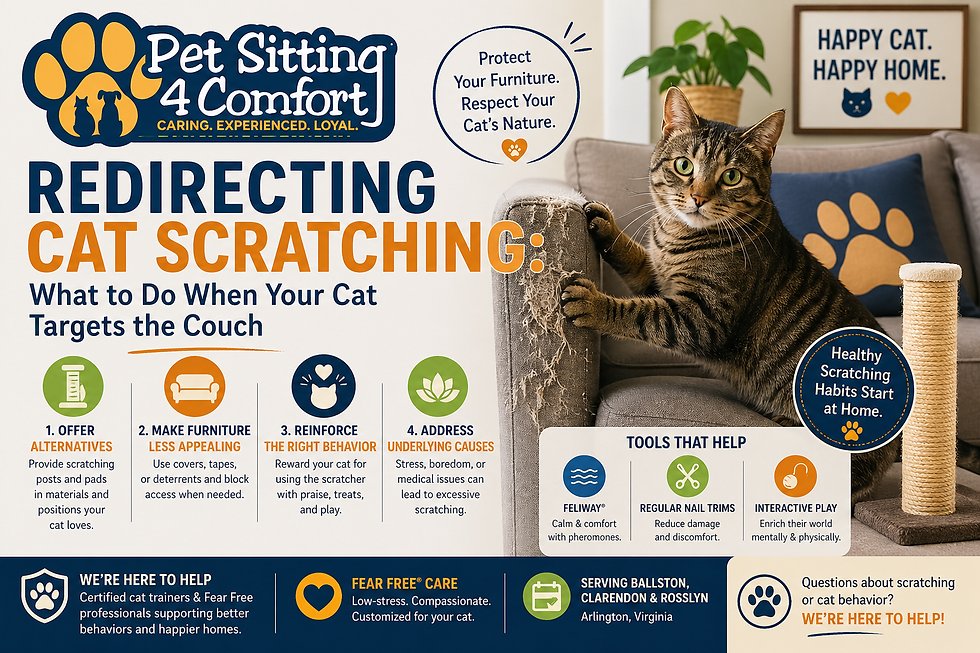
Scratching is a natural and necessary behavior for cats. But when your cat starts targeting the couch, carpet, or door frames, it can become frustrating and expensive.
At Pet Sitting 4 Comfort® (PS4C), we understand the challenge. As Fear Free Certified® professionals with cat behavior experience, we help clients redirect scratching in a calm, practical way.
The goal is not to stop scratching entirely. The goal is to guide it to better places.
Why Cats Scratch
Scratching serves several normal purposes for cats:
Maintains nail health by shedding outer claw layers
Marks territory through scent glands in the paws
Stretches muscles and relieves tension
Provides emotional release and stimulation
Creates visible and scent-based communication
Veterinary behavior sources note that scratching is normal feline behavior and should be redirected rather than punished.
Step 1: Offer Better Scratching Options
Give your cat approved places to scratch.
Try offering:
Vertical scratching posts
Horizontal cardboard scratchers
Angled scratchers
Cat trees with sisal surfaces
Wall-mounted scratch zones
Some cats prefer height, while others prefer floor-level surfaces.
Placement Matters
Place scratchers directly next to the couch or area your cat already uses. Once habits improve, you can slowly move the scratcher to a preferred location.
Studies and behavior experts note that location, texture, and stability strongly influence scratching preferences.
Step 2: Make the Couch Less Appealing
While teaching new habits, temporarily reduce access to the target area.
Helpful options:
Double-sided tape
Furniture covers or throws
Plastic protectors
Blocking access when unsupervised
Rearranging furniture temporarily
Avoid harsh sprays, yelling, or punishment.
Step 3: Reward the Right Behavior
Cats learn best through positive associations.
When your cat uses the scratching post:
Offer praise
Give treats
Use catnip or silvervine
Add toys near the scratcher
Play nearby to build a positive routine
Consistency matters more than intensity.
Step 4: Look for Stress or Triggers
Sometimes increased scratching is linked to stress.
Common causes include:
Moving homes
New pets
Visitors
Changes in schedule
Boredom
Conflict between pets
Providing hiding spots, elevated spaces, enrichment, and predictable routines can help reduce stress-related scratching.
Step 5: Keep Nails Managed
Routine nail trims can reduce damage while training new habits.
If your cat tolerates handling:
Trim regularly
Use calm, short sessions
Reward after trims
Never force handling if it creates fear.
Important Note: Avoid Declawing
Declawing is not a training solution. It is a surgical procedure that can create pain, stress, and long-term behavior problems.
Most modern welfare and veterinary groups encourage humane alternatives such as redirection, nail care, and enrichment.
How PS4C Helps
At Pet Sitting 4 Comfort®, we support cats through low-stress routines and enrichment-focused care.
We can help with:
Scratch redirection support during visits
Nail trim support when appropriate
Play and enrichment sessions
Observations about triggers or home setup
Gentle handling for shy or anxious cats
Trusted Resources
We recommend:
Your veterinarian for sudden behavior changes
Final Thought
Your cat is not being spiteful. Scratching is communication and self-care.
With the right setup, better alternatives, and patience, you can protect your couch while meeting your cat’s natural needs.


Comments